
Batch 001  ·  40 bottles, numbered by hand  ·  Free shipping within Hawaiʻi
Kona Coast Nutrients Kona Coast Nutrients
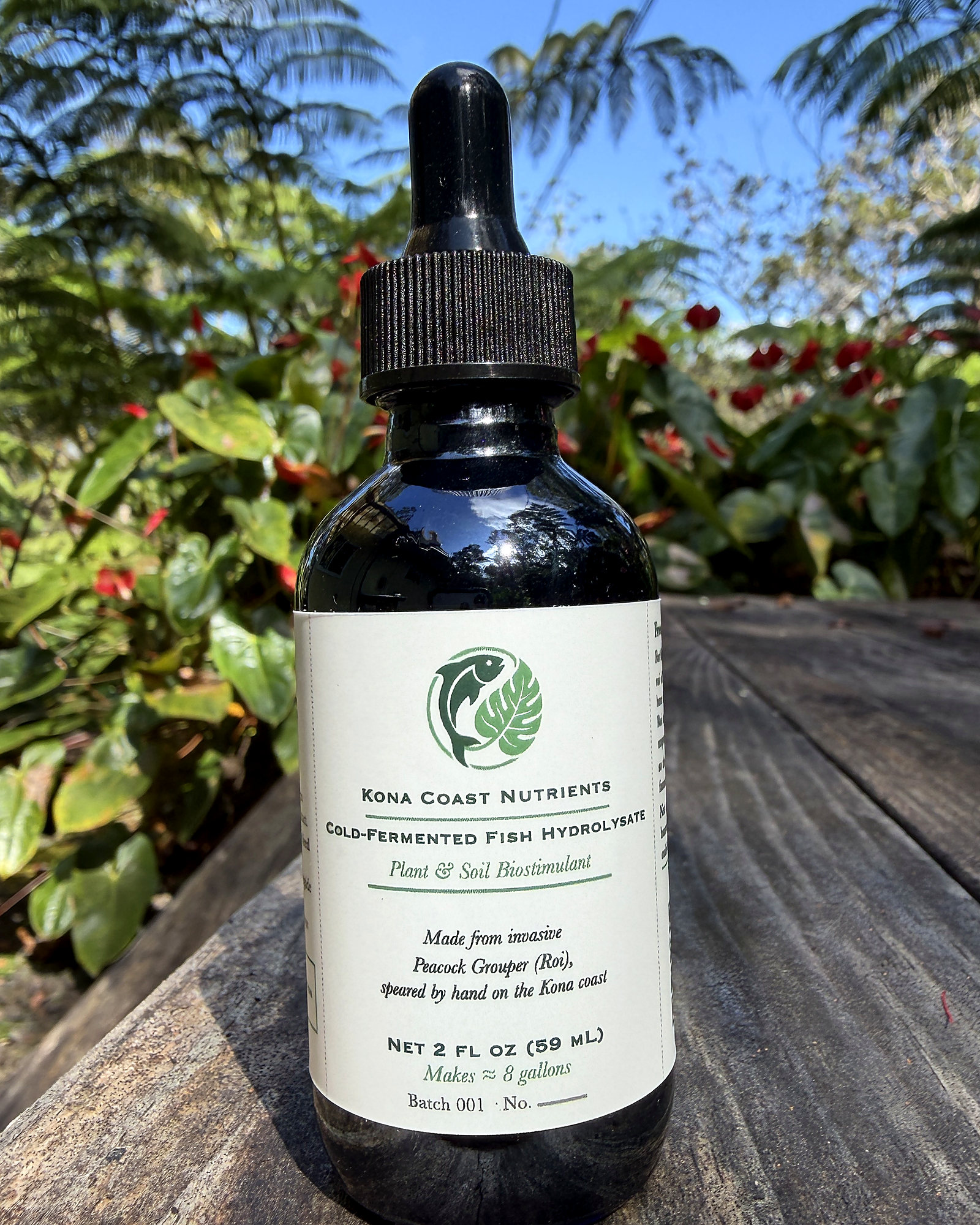
A 2 fl oz cobalt glass dropper bottle of Kona Coast Nutrients cold-fermented fish hydrolysate on a weathered wood table, Kona
Batch 001  ·  No. ___ of 40

Cold-Fermented Fish Hydrolysate

Plant & soil biostimulant
2 fl oz  ·  Cobalt glass  ·  Dropper
$29 about $3.60 per finished gallon
One bottle makes about eight gallons of plant food.
Diluted 1 part to 500 — a scant 1½ teaspoons in a gallon of water. You are not buying two ounces of liquid; you are buying eight gallons of it.
Free shippingAnywhere in the Hawaiian Islands
Hand-numberedEach bottle signed from the first run
Shelf stableNo refrigeration — keep it out of the sun
30-day returnsUnopened, we refund it
Batch 001 is the first forty bottles. There is plenty of hydrolysate in the barrels — what is limited is one person filling, labelling and numbering them by hand. So the scarce thing here is not the product. It is a number under forty‑one on the label.
Shipping — free, Hawaiʻi only for now Free shipping anywhere in the Hawaiian Islands, or pick it up in Kona. We are not shipping to the mainland yet — most states require a product to be registered with their agriculture department before it can be sold there, and we would rather tell you that than quietly ship it anyway. Shipping & returns
How to use it

Dilute 1 part to 500. That is 1½ teaspoons (7.5 mL) in one gallon of water, or about 10 drops in a cup.

  • Soil drench — water it in at the base, every two to four weeks through the growing season.
  • Foliar — same dilution, misted on leaves in the early morning or evening, never in midday sun.
  • Shake before use. Settling is normal — it is a whole-fish ferment, not a clarified liquid.

Use it alongside your regular plant food, not instead of it. This is a biostimulant: it feeds the life in the soil rather than the plant directly.

What is in it

Whole invasive roi and cane sugar. Nothing else — no preservatives, no synthetic additives, no water added.

The fish go into the barrels the same day they are speared and ferment cold, slowly, in small batches. It is never heated. Most fish products for the garden are cooked emulsions; cooking is faster, but it breaks down the very things worth keeping. In a cold ferment the amino acids and peptides come through intact.

What it smells like

Like fermented fish and molasses — sweet, sharp, and unmistakably marine. It is not offensive but it is not perfume either, and we are not going to pretend otherwise.

At 1:500 in a watering can the smell is faint and gone from the soil within a day or so. Cap it tight between uses.

Where it comes from

Every fish in the barrel was speared by hand, from shore, on the Kona coast — one fish at a time, by divers who know exactly what they are looking at. No boats, no nets, no bycatch.

Every roi we remove is processed on island into this. Nothing goes to a landfill.

Not for use on food crops
Not for human or animal consumption
Keep out of reach of children.
What You Are Actually Buying

Two ounces is the wrong way to think about it.

2 fl ozwhat arrives at your door
1 : 500what you dilute it to
~8 galwhat you end up with
Per bottle
$29.00 — one 2 fl oz bottle, hand-numbered, delivered in Hawaiʻi
Per finished gallon
$3.72 — the number that actually matters when you are standing at the watering can
How long it lasts
A dozen houseplants watered every two weeks: most of a season. A raised bed on a two-week schedule: roughly two months.
Set Expectations

A biostimulant, not a fertilizer.

If you compare this to a bag of 10-10-10, it will look weak, and that comparison is the wrong one. A salt fertilizer hands the plant its nutrients directly. This does something else: it feeds the microbial life in the soil, and the soil feeds the plant.

So keep using whatever plant food you already use. This goes in alongside it, into the ground that food lands in. What people notice first is the soil — darker, springier, holding water differently — and then the plants.

We would rather undersell this and have you keep buying it than promise you a miracle in a two-ounce bottle.

The Story

Freezer’s full again.

For fifteen years, that was the problem. We spear roi off the Kona coast — a reef predator brought here in 1956 that eats about 150 native fish a year. Roi can’t feed anyone; ciguatera turns up unpredictably, fish to fish. We wouldn’t dump them, so they piled up in a freezer while we called farmers, giving them away as fertilizer.

Not anymore. Now they go straight into the barrels, the same day they are speared. Whole fish, cold‑fermented, never heated. Nothing to a landfill.

Kona Coast Nutrients is what we built so the answer would stop being a phone call. The fish that don’t belong on the reef now feed the land.
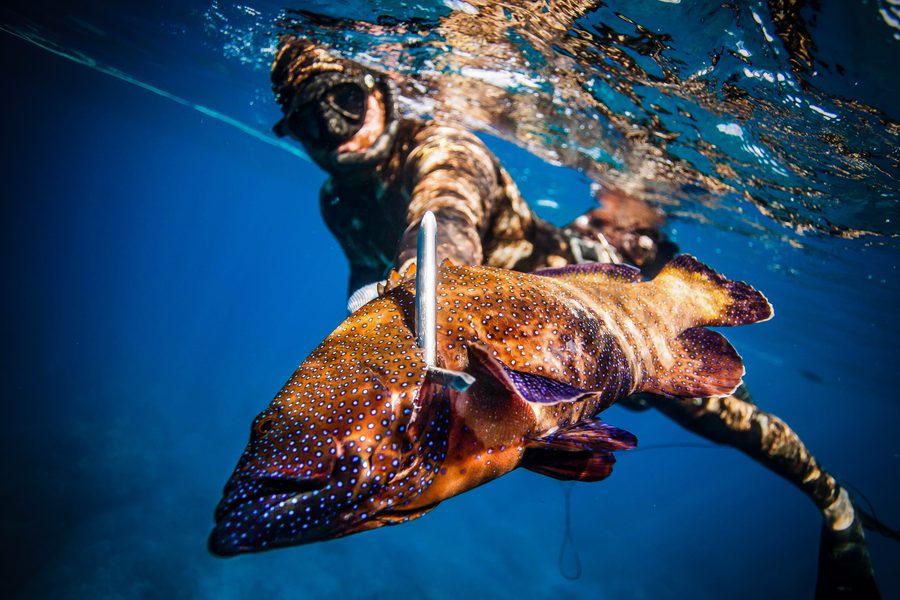
A diver at the surface with an invasive roi on the spear shaft, Kona coast
An invasive roi on the shaft, Kona coast.
Said Plainly

The goal is eradication.

A business built on an invasive fish has to be able to say that out loud. This product is a byproduct of removal — never a reason to keep roi on the reef. We measure progress the only honest way available to us right now: in pounds of fish taken off the reef, not in claims about what the reef does next.

And if the day ever comes when there are no roi left to pull, this bottle goes away. That would be the point.

Questions

The things people actually ask.

Why does this cost more than the fish fertilizer at the garden store?

Because of how it is made and how little of it you use. A gallon jug of cooked fish emulsion is a commodity — made at industrial scale from processing scrap, heated to speed it up. This is whole fish, speared one at a time from shore, fermented cold for months in small batches.

And you are not comparing like to like. That gallon jug gets diluted maybe 1:64. This goes 1:500. Per finished gallon of plant food, the gap is a lot smaller than the shelf price suggests.

Can I use it on my vegetables?

No. Not for use on food crops — that is printed on the bottle and we mean it.

Roi carry ciguatoxin unpredictably, fish to fish. It is heat-stable and nothing in our process is designed to remove it, and we have not tested the finished product for it. Until we have a lab result in hand, the honest answer is: ornamentals, landscape, lawn, nursery stock — not the vegetable bed.

Is it safe around my pets and kids?

Treat it the way you would any concentrated garden product. Not for human or animal consumption, keep it capped and out of reach, and wash your hands after handling the concentrate.

Once diluted and watered into the ground, we would not expect a dog nosing around the bed to be an issue — but do not let anyone drink it, and do not use it where you grow food.

Why can’t I get it on the mainland?

Nearly every state requires a product like this to be registered with its department of agriculture before it can legally be sold to a resident there. Hawaiʻi is one of the very few that does not.

We are selling forty bottles to find out whether anyone wants this. Registering across the mainland before we know the answer would cost more than the answer is worth. So we are selling here first, honestly, and expanding when the volume justifies the paperwork. Join the list and we will write when it changes.

Does buying this create a reason to keep roi on the reef?

It is the right question to ask, and we ask it of ourselves. The answer is that the fish come out whether or not the bottle sells — removal is the point, and the product exists so the fish do not go in a landfill.

The day roi are gone from these reefs, this company has no product. We consider that the win condition.

How long does an open bottle last?

It is shelf stable and does not need refrigeration — the sugar content is high enough that spoilage organisms cannot get going. Bottles have sat six months in a hot shipping container without trouble.

Keep it capped, out of direct sun, and shake before use. Separation and a bit of sediment are normal.

Batch 001

Forty bottles, numbered by hand.

The reef feeds the land. If that is a thing you want on the shelf above your watering can, this is the first run of it.

Free shipping within Hawaiʻi · Pickup available in Kona · 30-day returns